


My 2026 Planner Setup
Contents

This post was automatically translated by AI from the Japanese original. Some screenshots are in Japanese.
I went with a vertical planner for 2026
I love planners, so I can’t stop wanting to try all kinds of them.
But if I own too many, keeping track gets messy, so I want my schedule in a single planner!
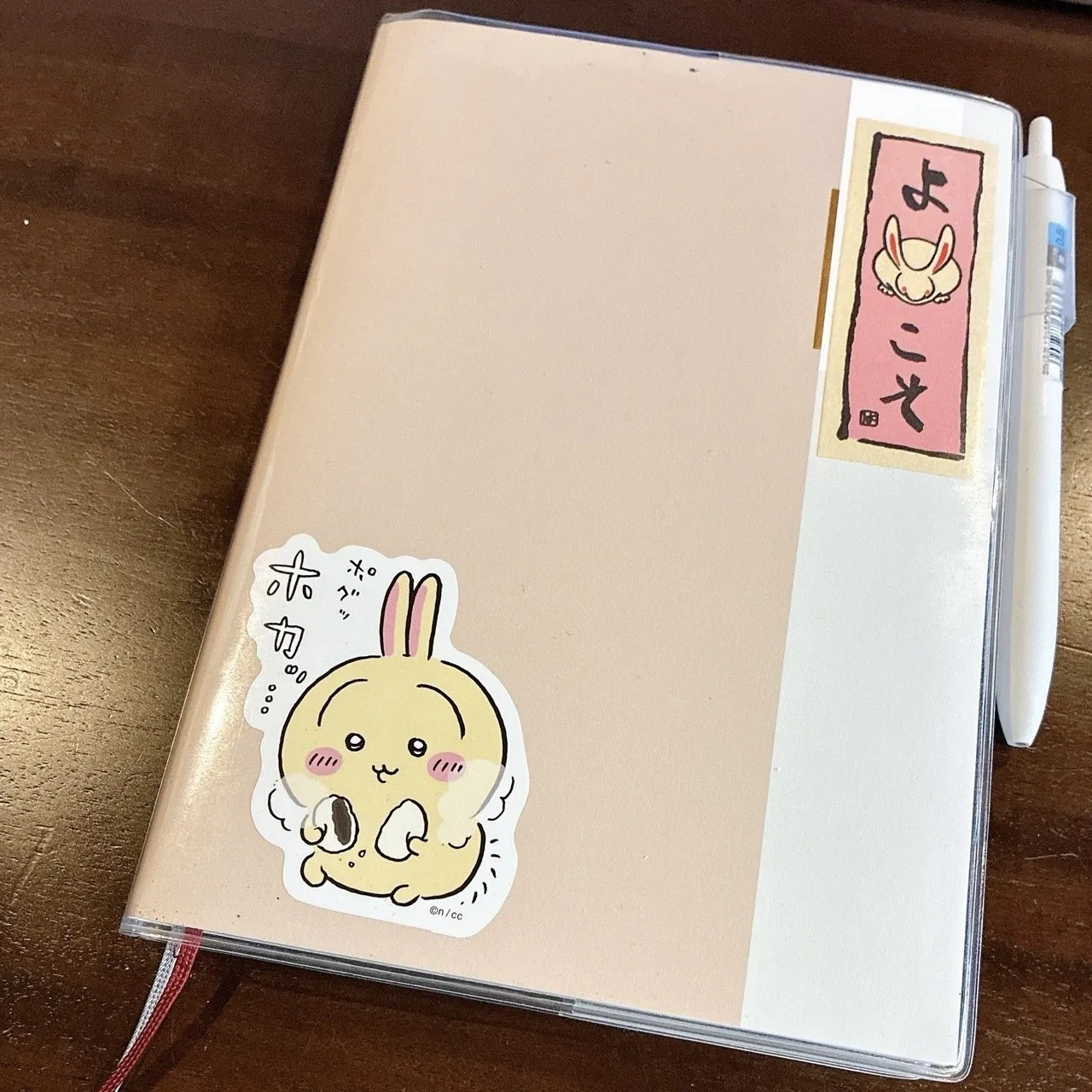
I’ll collect stickers for the cover over the whole year.
For 2026, I decided to use this Otona Benkyo Techo (a Japanese study planner for adults).
I split things up like this:
- Monthly and yearly records → planner
- Everyday ideas and notes → notebook
By the way, the ballpoint pen I use in my planner is the JetStream Lite.
It works well with markers and it’s easy to write with.
The habit tracker works nicely
I like that the monthly pages have a Gantt chart.
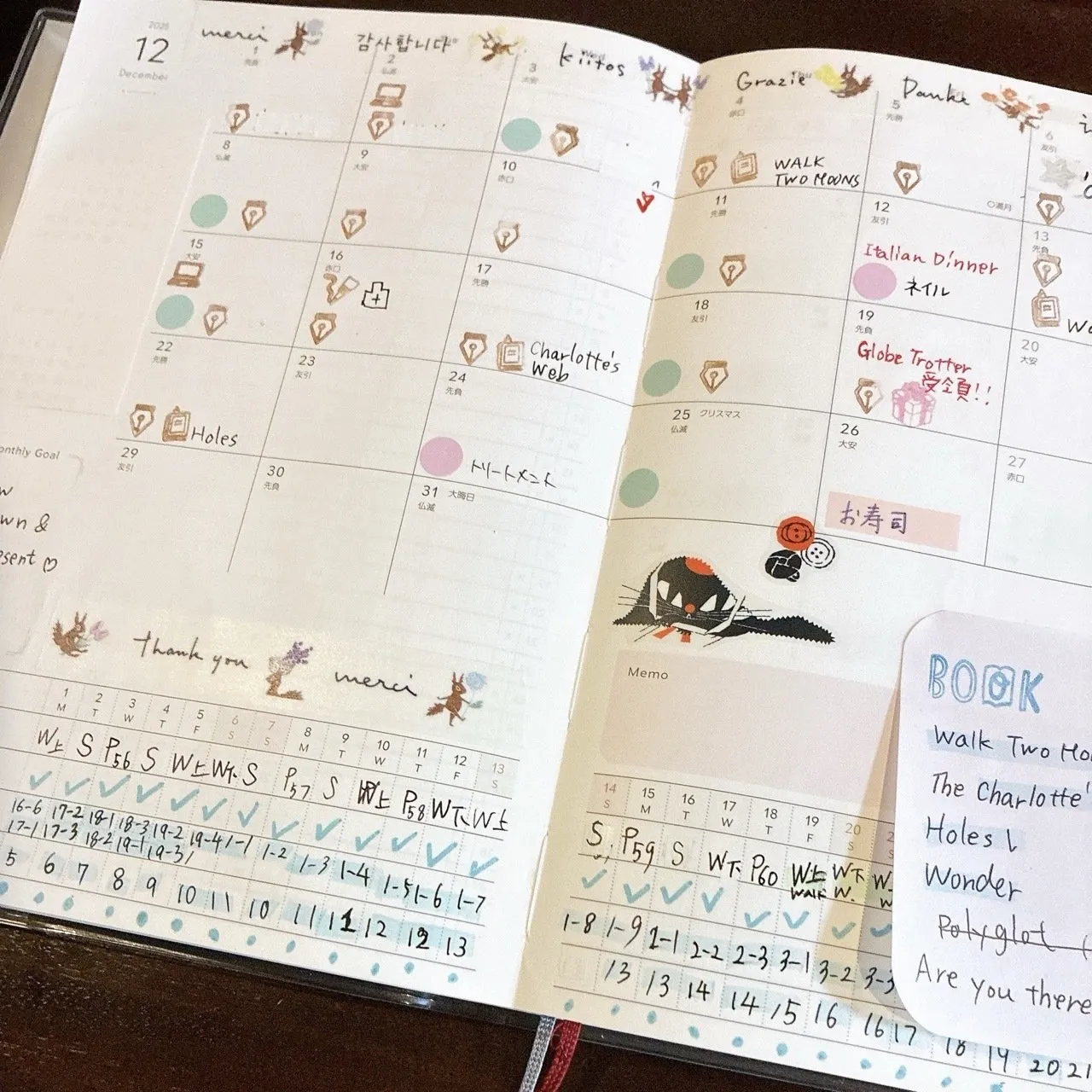
Recording my daily habits
Until now, I stamped the things I’d done, like writing a blog post, exercising, or reading a book, but the things I do every day lined up and made my monthly page cluttered.
I figured that if I keep the main events on the monthly page and the daily routines in the Gantt chart, I can keep things tidy.
Right now I’m logging my studying in the habit tracker.
Lined up along the horizontal axis, my streak is obvious at a glance!
I work hard every day because I want to fill in today’s mark.
I also made an app with this habit-tracker feel: A Dream I’d Had for Years Came True in One Week
There’s another habit tracker near the front of this planner.
I thought I’d use it to record something new I want to try each month.
Besides studying, I’d like to use it to widen my hobbies, like drawing.
That’s what I thought, but I haven’t been using it. I keep opening only the monthly and weekly pages and forgetting to go back to the front.
Vertical layouts ignore the time axis
At first I used the vertical layout to write down when I did what and for how long.
But after a month or two, there were parts that didn’t fit my life.
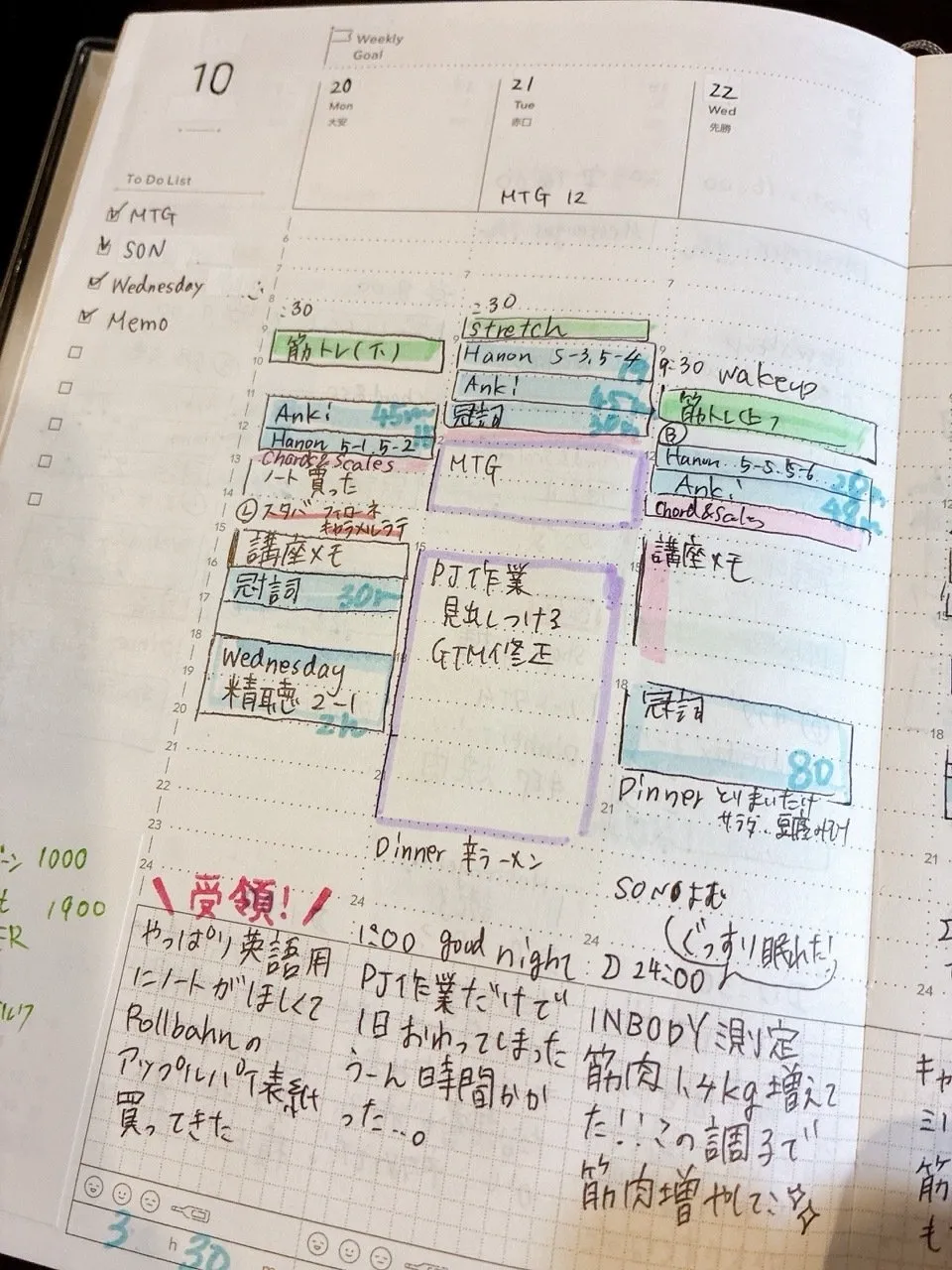
For example:
- It’s in one-hour units, so it’s hard to write 30-minute tasks
- There’s no room to write what I did (I really want to write things like “textbook pp. ○–○”)
- I forget what I was doing at that time, so I can’t write it
The second one was especially troublesome: I couldn’t fit in what I’d done.
I tried to note that time in detail, but there wasn’t enough space.
Thinking about it, I realized that for me, recording what I did and how far I got matters more than when I did it.
So I ignored the time axis completely, drew horizontal lines, and settled on recording what I did each day by category.
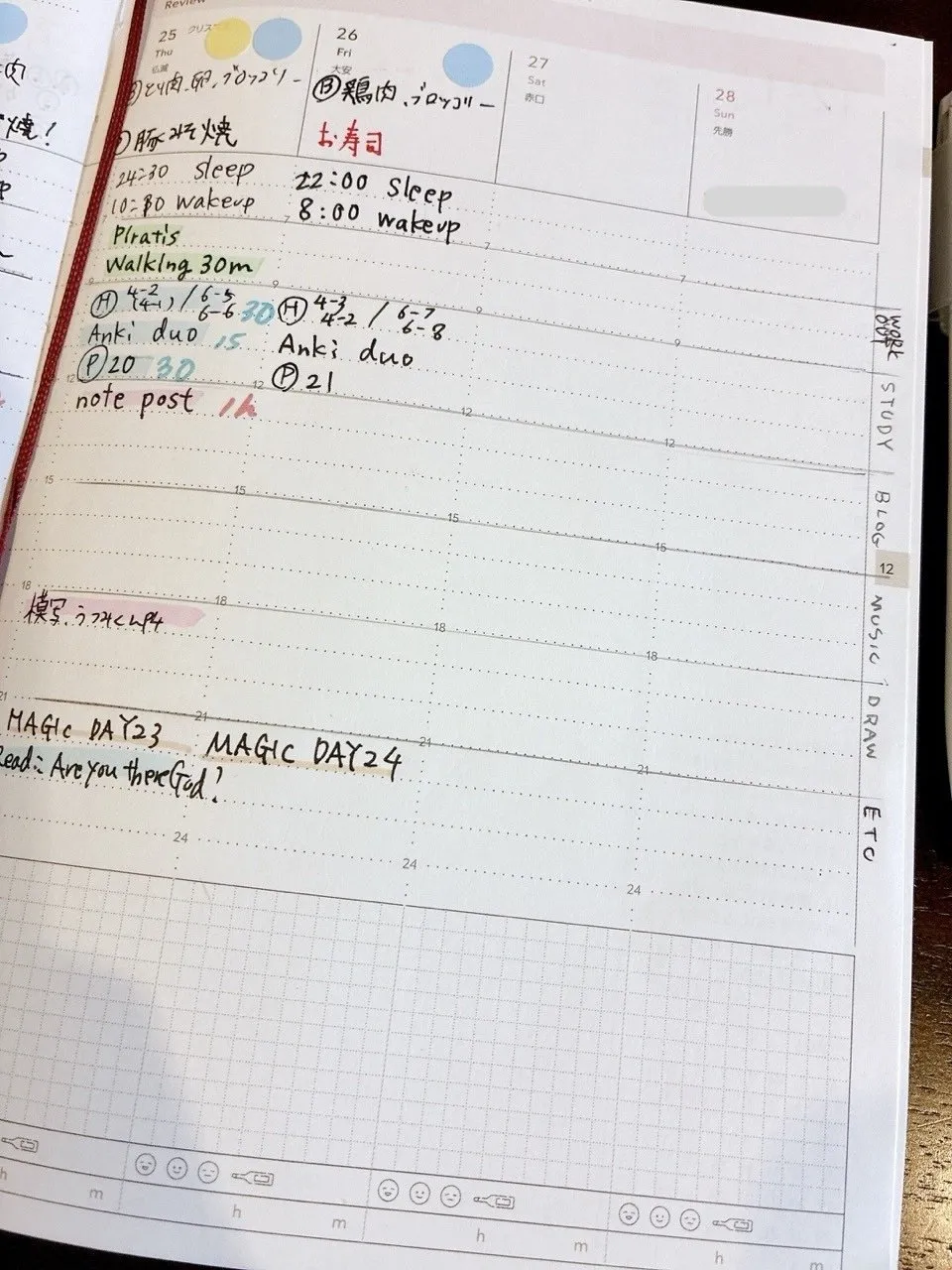
So much for “vertical.”
In one week, I can see progress like “I got from here to here.”
By the way, I basically write in black. I color-code with markers: green for exercise, blue for studying, and pink for hobbies and fun.
Making a page for the blog
In 2026 I want to be able to keep writing the blog steadily.
To log my posts, I printed a new yearly schedule and stuck it onto the free pages at the back.
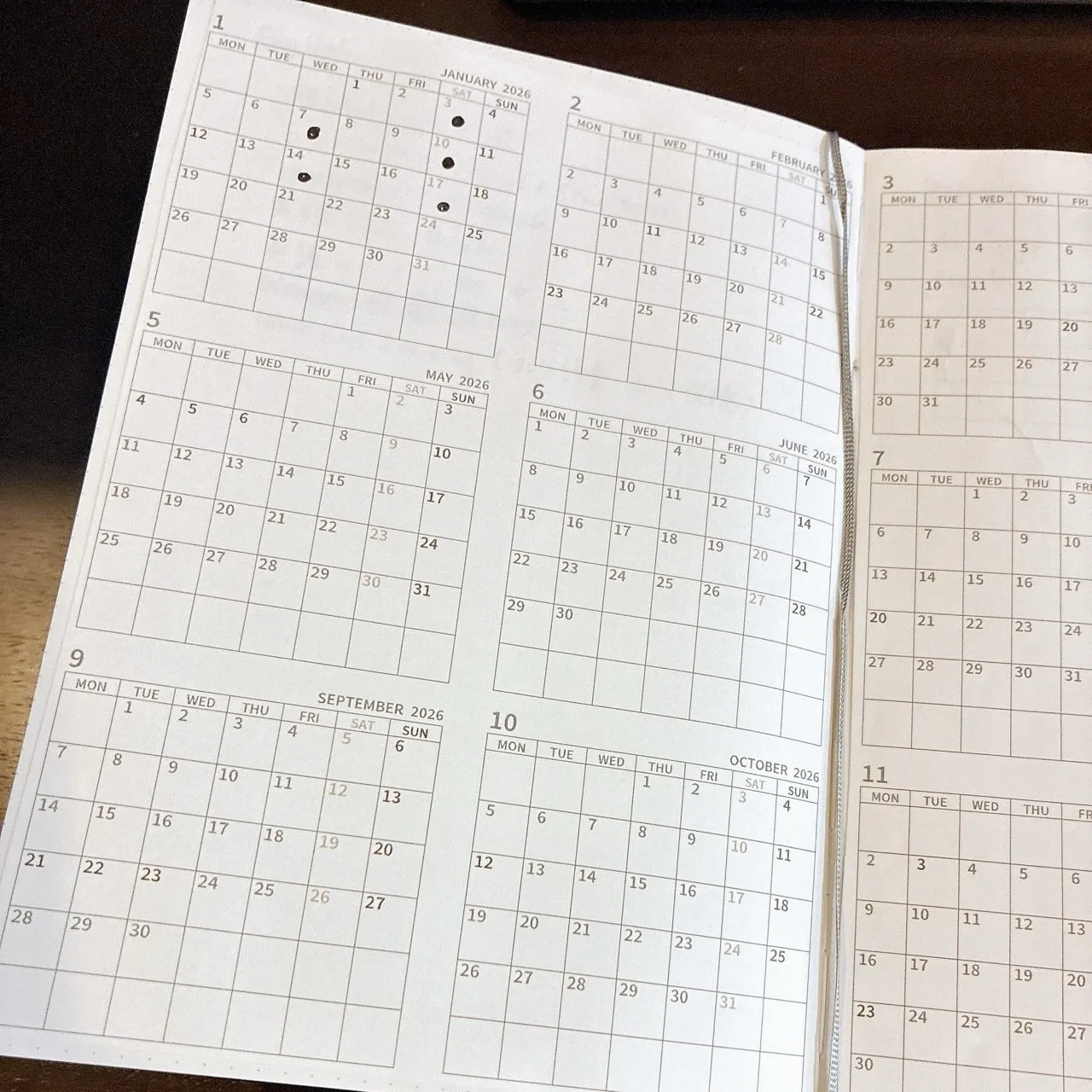
I put a ● whenever I write a post.
I printed this one from the site below and pasted it in.
I was impressed by how rich the refill selection is.
Adapting it as I go
You write in a planner every day, so if it feels cramped or lacking, you won’t keep it up.
My interests and circumstances will probably change, too, and I think the way that feels comfortable now will be different in three or six months.
So I want to change how I use it as needed and add new templates, without sticking to a set form.
Posts on using planners and notebooks
Tracking My Workouts in a Japanese Field Notebook (Sokuryo Yacho)


