


There Are Only About Three Important Things
This post was automatically translated by AI from the Japanese original.
Do you ever get swamped by all the things you want to do and all the things you have to do?
▼The time I was swamped with things I wanted to do and asked ChatGPT for advice
Can ChatGPT Manage Your Schedule? What I Learned Trying It, and Why It Doesn’t Fit (in Japanese)
I’m a very curious person, and I always want to try this and that.
At the start of the year I was interested in Korean, I want to do music, I want to do illustration, and now I’m into 3D too.
▼Records of my Korean and 3D adventures
How I Started Teaching Myself Korean: Materials Like Pimsleur and How I Study (in Japanese)
What I Learned Making My First 10 Models in Blender, Starting With a Hamburger
When I studied psychology, I learned that this is “also a trait of people with a rich feminine side.”
It’s a style where, rather than working hard toward a goal, you put yourself among the things you love and that move your heart, go with the flow of the moment, and enjoy it.
But because of that, I sometimes end up doing everything halfway, or my feelings swell up while nothing actually moves, and I get disappointed.
Trying to do everything may, surprisingly, end up letting you do nothing.
At times like that, I always remember this book.
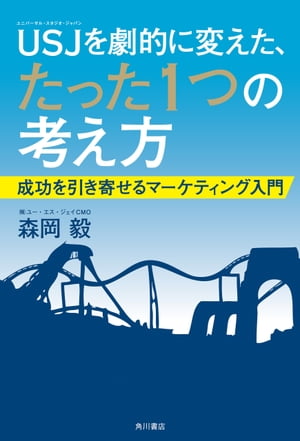
This book is famous as a marketing book (USJ is Universal Studios Japan, a theme park), but the part that stayed with me is “making strategic thinking a habit.”
The idea is to choose what really matters and focus on that.
I usually forget almost everything I read in business and self-help books.
But the idea of “strategic thinking (choosing what matters and concentrating on it)” has stuck with me and been useful.
What you do is super simple:
Look at your hand, and decide priorities for the three fingers that count: the longest finger, then the next two longest.
Aim for 100 points on the longest finger (= the most important thing).
Aim for 80 points on the next two longest fingers.
For the remaining four or five, just pretend you’re doing them.
Having you look at your own hand makes it easy to understand.
The book’s teaching that “there are only about three important things at most” has really stayed with me.
If the author, who is arguably the most famous marketer in Japan, says so, then someone like me, who doesn’t carry such big responsibilities, should be perfectly fine narrowing things down to just three.
Especially these days, as I get older and can’t spend my energy and time as limitlessly as I used to.
I want to value the power of deciding to narrow things down.


