


Read for 30 Minutes and Underline: My Simple Extensive Reading Habit
Contents

This post was automatically translated by AI from the Japanese original. Some photos show Japanese text.
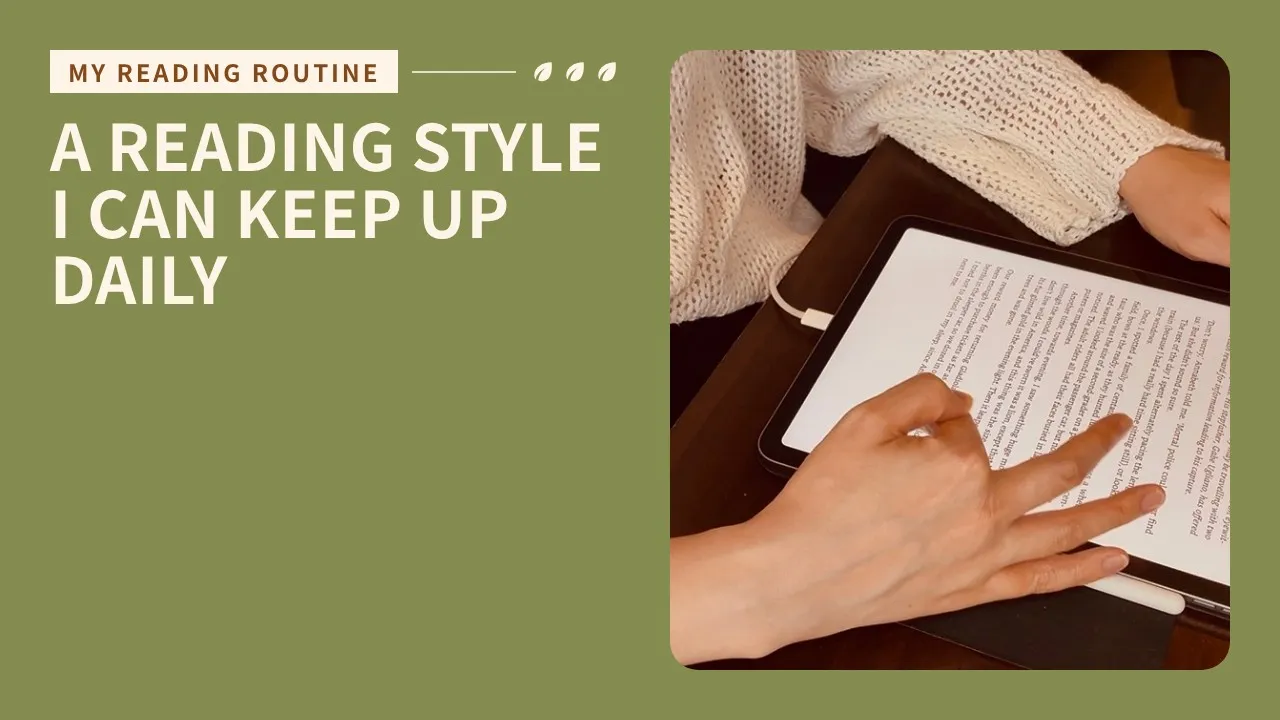
Now that I’ve reached one million words of extensive reading in English, I feel like I’ve found a reading style I can actually keep up.
In this post I’ll share my own reading routine.
Timing 30 minutes

Reading with a timer beside me
My daily goal is 30 minutes of English books on weekdays.
When I read, I measure the time with a timer.
Setting the timer works as my start switch.
30 minutes is just a guide. On days when I’m not motivated I stop at 20 minutes, and sometimes I keep going past 30 until I reach a good stopping point in the story.
I don’t look up words in a dictionary very often while reading.
When I checked every time, reading kept getting more of a hassle.
Lately I’m so eager to find out what happens next that I just keep moving forward.
That said, I do look up words that catch my attention, so it depends on my mood.
By the way, on a Kindle you can long-press a word to see a translation, which is handy.
Logging the word count when I finish

My reading log in Obsidian
When I finish a book, I record the book, the date I finished it, and its word count.
I use a text app called Obsidian, customized to my needs.
It can pull in book information from Google Books, and since I record each book’s word count, it can add up the number of words I read each month.

Recording books I want to read and my monthly totals
Watching that word count grow gives me a sense of accomplishment.
Adding unfamiliar words to a flashcard deck
To understand a text, vocabulary is essential.
When there are lots of words I don’t know, it’s stressful, like reading a text full of holes.
(I’m reading a children’s book right now, and words from the Eiken Grade 1 level — the top level of Japan’s English proficiency test — show up all the time. Vocabulary really does affect how easy a book is to read.)
So I steadily work on increasing the words I know.
While reading, I highlight words that catch my eye, or words I’ve seen before but forgot the meaning of.
After I finish, I go over just those words again and add them to my flashcard deck.
On a Kindle you can jump to the highlighted spots, which makes it easy to look back later.
For my own deck I use an app called Anki.
It takes some getting used to at first, but it becomes a deck that’s entirely mine, and I like that I can set whichever fields I want and sort cards however I like.
- Word
- Meaning
- Example sentence (taken from the book)
- Audio

I note down phrases from games and movies too, not just books
Once a word is registered, it comes back for review at the right moments, following the forgetting curve.
As the number of words I know grows, I get a friendly feeling while reading: “Oh, I learned this one the other day” or “This showed up before.” That makes it fun.
However you do it, it’s enough if you enjoy it.
I’ve kept writing on and on, but in the end I think you should simply read in whatever way you enjoy.
If you like reading carefully, you can read one sentence at a time. Underlining and reading with a dictionary at hand can be fun too.
I admire “annotation” (a way of reading where you underline and write notes in the book) as practiced by readers overseas, but it took too much time and made reading feel like too high a hurdle, so I settled on simply reading.
My goals are:
“To read English as smoothly as I read Japanese."
"To picture scenes from the text and feel for the characters."
"To enjoy English wordplay and expressions.”
So I’ve come to focus only on picking up vocabulary and interesting expressions.
This may change again in the future, but this is where I am now.
Let’s enjoy reading at our own pace!
Articles about extensive reading in English
▼ My record of reaching one million words
I Read One Million Words in English: My Book List and Tips for Reading Every Day
▼ What I did to get my extensive reading on track
Tips for reading books in English (in Japanese)
▼ The books I recommend starting with
Starting Extensive Reading in English: The First Books I Read


